
Electrical Equipment Recycling
Fans, motors, pumps, generators, and transformers.
Compliance
CPCB Authorized
Audit Trail
Official Certificate
Experience
25+ Yrs Leadership
Certified Electrical Equipment Recycling
Full chain-of-custody collection, authorized processing, and CPCB green audit clearance across NCR.
Understanding Electrical Equipment Recycling in India
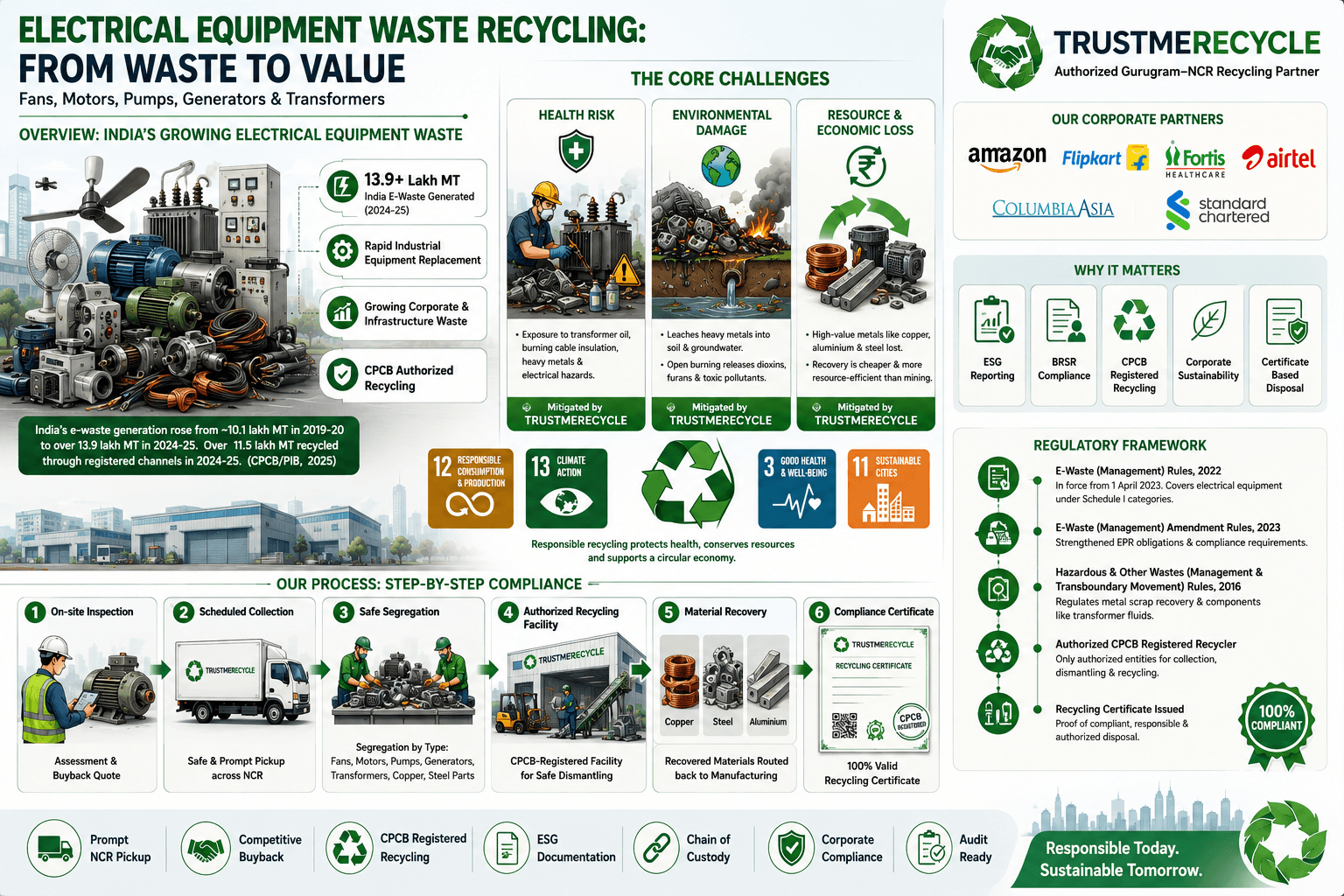
Electrical equipment scrap — fans, motors, pumps, generators, and transformers pulled out during renovations, equipment upgrades, or decommissioning — is a constant byproduct at warehouses, malls, hospitals, and corporate campuses. It sits primarily under India's e-waste framework, alongside general scrap-metal and hazardous-waste rules for components like transformer fluids. Nationally, India's e-waste and electrical-equipment waste volumes have grown sharply, rising from around 10.1 lakh metric tonnes generated in 2019-20 to over 13.9 lakh metric tonnes in 2024-25 (CPCB/PIB, 2025).
For facility and procurement teams, electrical equipment scrap is often treated as routine debris — but mishandling it carries both an environmental cost and a compliance gap that a documented, authorized disposal process closes.
Key Highlights
Processing Model
CPCB Registered Recycling Stream
Corporate Rate Model
Competitive Buyback (No Disposal Fee)
Turnaround Commitment
Prompt On-Site NCR Pickups
ESG Audit Clearance
100% Valid Recycling Certificate
Materials We Accept
The specific electrical equipment sub-types TRUSTMERECYCLE buys, collects, and routes to compliant recycling.
The Critical Challenges We Solve
Unregulated waste disposal creates severe health risks, environmental damage, and financial losses.
Health Risk
Older transformers and capacitors can contain hazardous fluids and heavy metals. Breaking these open informally — a common practice in scrap yards — releases toxic substances directly into the immediate environment.
Environmental Damage
Discarded motors, pumps, and transformers, if landfilled or informally processed, leach heavy metals into soil and groundwater.
Economic Loss
Copper windings, aluminium housings, and steel components recovered from motors and transformers are highly recyclable, high-value materials — recovering them is markedly cheaper and less resource-intensive than mining and refining virgin metal.
Health Risk Breakdown
Workers manually stripping motors and transformers for copper, often by burning off insulation, are exposed to toxic combustion fumes on a routine basis in India's informal scrap sector, where use of protective equipment remains low (WHO; industry reporting). Older transformers and capacitors can also contain hazardous fluids that pose direct handling risks if dismantled without proper procedure.
Environmental Impact
Electrical equipment scrap left in landfill conditions is a long-term source of heavy-metal contamination of soil and groundwater. The Hazardous and Other Wastes (Management and Transboundary Movement) Rules, 2016 bring recovered metal scrap into the regulated "other wastes" category precisely because of this recovery-versus-contamination trade-off: done right, metal recovery from equipment is legitimate, valuable material recovery; done informally, it's a pollution source.
UN SDG & Corporate ESG Alignment
Partnering with TRUSTMERECYCLE provides auditable proof for corporate BRSR disclosures and international sustainability standards.
Authorized electrical equipment disposal supports SDG 12 (Responsible Consumption and Production) by recovering copper, aluminium, and steel for reuse, SDG 6 (Clean Water and Sanitation) by preventing heavy-metal leaching into groundwater, and SDG 13 (Climate Action) by reducing emissions tied to virgin metal mining and refining.
Responsible Production
Keeps recoverable materials inside circular manufacturing chains.
Good Health & Well-being
Eliminates toxic exposure in informal dismantling chains.
Climate Action
Reduces emissions tied to virgin mining and illegal burning.
Sustainable Cities
Prevents unauthorized waste dumping across urban NCR.
Regulatory Rules & Legal Protection
Electrical equipment falls under the E-Waste (Management) Rules, 2022 (in force since 1 April 2023) and the E-Waste (Management) Amendment Rules, 2023, which cover electrical equipment under Schedule I categories, with Extended Producer Responsibility (EPR) obligations on producers and a requirement that end-of-life units go to CPCB-registered recyclers. Cabling, panels, and metal-scrap recovery additionally fall under the Hazardous and Other Wastes (Management and Transboundary Movement) Rules, 2016, which classifies such material recovery as a legitimate, regulated activity when handled by authorized entities under the prescribed waste hierarchy.
Recycling Certificate Issued
Every consignment concludes with an official document suitable for corporate audits, EPR compliance, and government inspections.
How TRUSTMERECYCLE Handles Electrical Equipment
A transparent 6-step recycling lifecycle built for scale, accountability, and regulatory clearance.
Assessment & Competitive Buy-Back
Share details of your fans, motors, pumps, generators, and transformers; we assess volume and material and offer a competitive purchase rate.
Frequently Asked Questions
Ready to Clear Out Your Electrical Equipment?
Schedule a free on-site evaluation in Gurugram & NCR. Get fair competitive market pricing, prompt pickup, and official CPCB compliance certificates.