
Consumer Electronics Recycling
TVs, mobile phones, tablets, cameras, audio systems, and gaming consoles.
Compliance
CPCB Authorized
Audit Trail
Official Certificate
Experience
25+ Yrs Leadership
Certified Consumer Electronics Recycling
Full chain-of-custody collection, authorized processing, and CPCB green audit clearance across NCR.
Understanding Consumer Electronics Recycling in India
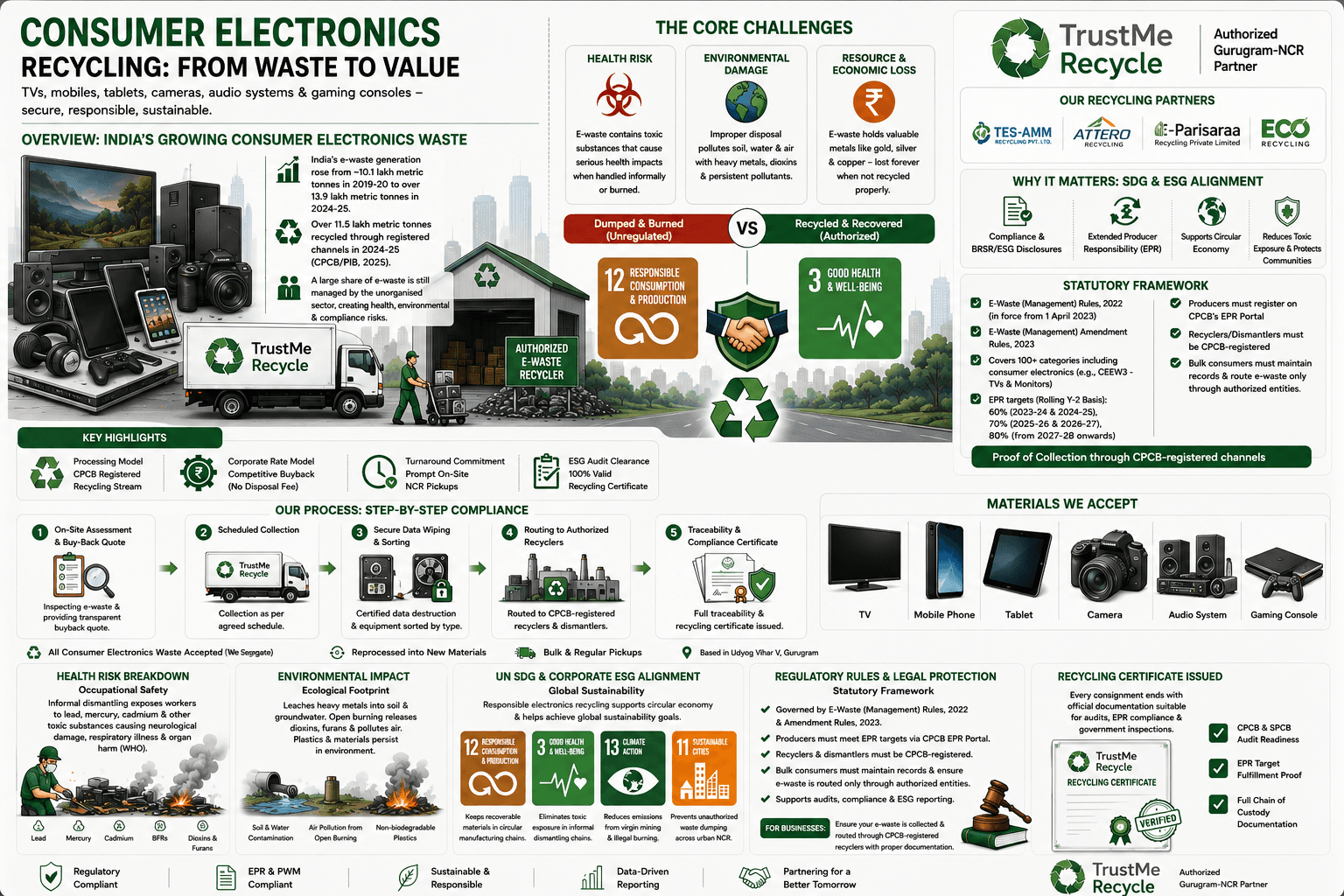
Consumer electronics — TVs, mobile phones, tablets, cameras, audio systems, and gaming consoles — are one of the fastest-growing waste streams in the country. India's e-waste generation rose from roughly 10.1 lakh metric tonnes in 2019-20 to over 13.9 lakh metric tonnes in 2024-25, with the CPCB recording over 11.5 lakh metric tonnes recycled through registered channels that year (CPCB/PIB, 2025). Despite this formal growth, a large share of India's electronic waste is still estimated to pass through the unorganised, informal recycling sector rather than authorized facilities (Al Jazeera, 2026; WHO).
For malls, hospitals, corporate campuses, and hospitality venues, consumer electronics accumulate constantly — from retired back-of-house TVs and audio systems to staff mobile devices and demo units swapped out during upgrades. Left unmanaged, it becomes both a storage burden and a compliance gap.
Key Highlights
Processing Model
CPCB Registered Recycling Stream
Corporate Rate Model
Competitive Buyback (No Disposal Fee)
Turnaround Commitment
Prompt On-Site NCR Pickups
ESG Audit Clearance
100% Valid Recycling Certificate
Materials We Accept
The specific consumer electronics sub-types TRUSTMERECYCLE buys, collects, and routes to compliant recycling.
The Critical Challenges We Solve
Unregulated waste disposal creates severe health risks, environmental damage, and financial losses.
Health Risk
Consumer electronics contain lead, mercury, cadmium, brominated flame retardants, and other substances that are hazardous when circuit boards and components are broken apart manually, burned, or acid-leached — the default method in India's informal recycling sector.
Environmental Damage
Discarded electronics that are landfilled or crudely dismantled release heavy metals into soil and groundwater and, when burned for metal recovery, emit dioxins, furans, and other persistent pollutants into the air.
Economic Loss
Circuit boards inside consumer electronics contain recoverable gold, silver, copper, and other metals — in concentrations that can be dramatically higher than freshly mined ore (UN Global E-waste Monitor). Every unit dumped instead of professionally recycled is recoverable value lost.
Health Risk Breakdown
Consumer electronics contain a documented mix of heavy metals (lead, mercury, cadmium) and persistent organic pollutants that, when released through informal dismantling, cause damage to the nervous system, kidneys, and respiratory system in exposed workers (WHO). Children living near informal e-waste processing sites show measurably higher exposure to these substances, with associated impacts on neurological development (WHO; Lancet Planetary Health).
Environmental Impact
Unmanaged electronic scrap is a slow-release source of soil and groundwater contamination — heavy metals leach out of discarded circuit boards, batteries, and casings over years in landfill conditions. Open burning, used informally to strip copper and recover metals, is a direct source of dioxin and furan emissions. Failing to recover metals from e-waste means continued reliance on virgin mining and ore extraction, which carries its own significant environmental and carbon footprint.
UN SDG & Corporate ESG Alignment
Partnering with TRUSTMERECYCLE provides auditable proof for corporate BRSR disclosures and international sustainability standards.
Structured, authorized consumer electronics disposal supports SDG 12 (Responsible Consumption and Production), SDG 3 (Good Health and Well-Being), and SDG 6 (Clean Water and Sanitation) by preventing heavy-metal leaching into groundwater. For corporates, hospitals, and large facilities, documented electronics disposal is increasingly a baseline expectation in ESG reporting and vendor compliance checks.
Responsible Production
Keeps recoverable materials inside circular manufacturing chains.
Good Health & Well-being
Eliminates toxic exposure in informal dismantling chains.
Climate Action
Reduces emissions tied to virgin mining and illegal burning.
Sustainable Cities
Prevents unauthorized waste dumping across urban NCR.
Regulatory Rules & Legal Protection
Consumer electronics in India are regulated under the E-Waste (Management) Rules, 2022 (in force since 1 April 2023) and the E-Waste (Management) Amendment Rules, 2023. The 2022 Rules expanded coverage to over 100 categories of electrical and electronic equipment across scheduled groups, including consumer electronics such as CEEW3 (TVs and monitors). Producers must register on CPCB's centralized EPR portal and meet progressive annual recycling targets — 60% for 2023-24 and 2024-25, rising to 70% for 2025-26/2026-27 and 80% from 2027-28 onward. Recyclers and dismantlers must be CPCB-registered.
Recycling Certificate Issued
Every consignment concludes with an official document suitable for corporate audits, EPR compliance, and government inspections.
How TRUSTMERECYCLE Handles Consumer Electronics
A transparent 6-step recycling lifecycle built for scale, accountability, and regulatory clearance.
Evaluation & Competitive Buy-Back
We assess your consumer electronics volume and offer a competitive purchase rate.
Frequently Asked Questions
Ready to Clear Out Your Consumer Electronics?
Schedule a free on-site evaluation in Gurugram & NCR. Get fair competitive market pricing, prompt pickup, and official CPCB compliance certificates.