
Battery Waste Recycling
Car, truck, UPS, lead-acid, and lithium-ion batteries.
Compliance
CPCB Authorized
Audit Trail
Official Certificate
Experience
25+ Yrs Leadership
Certified Battery Waste Recycling
Full chain-of-custody collection, authorized processing, and CPCB green audit clearance across NCR.
Understanding Battery Waste Recycling in India
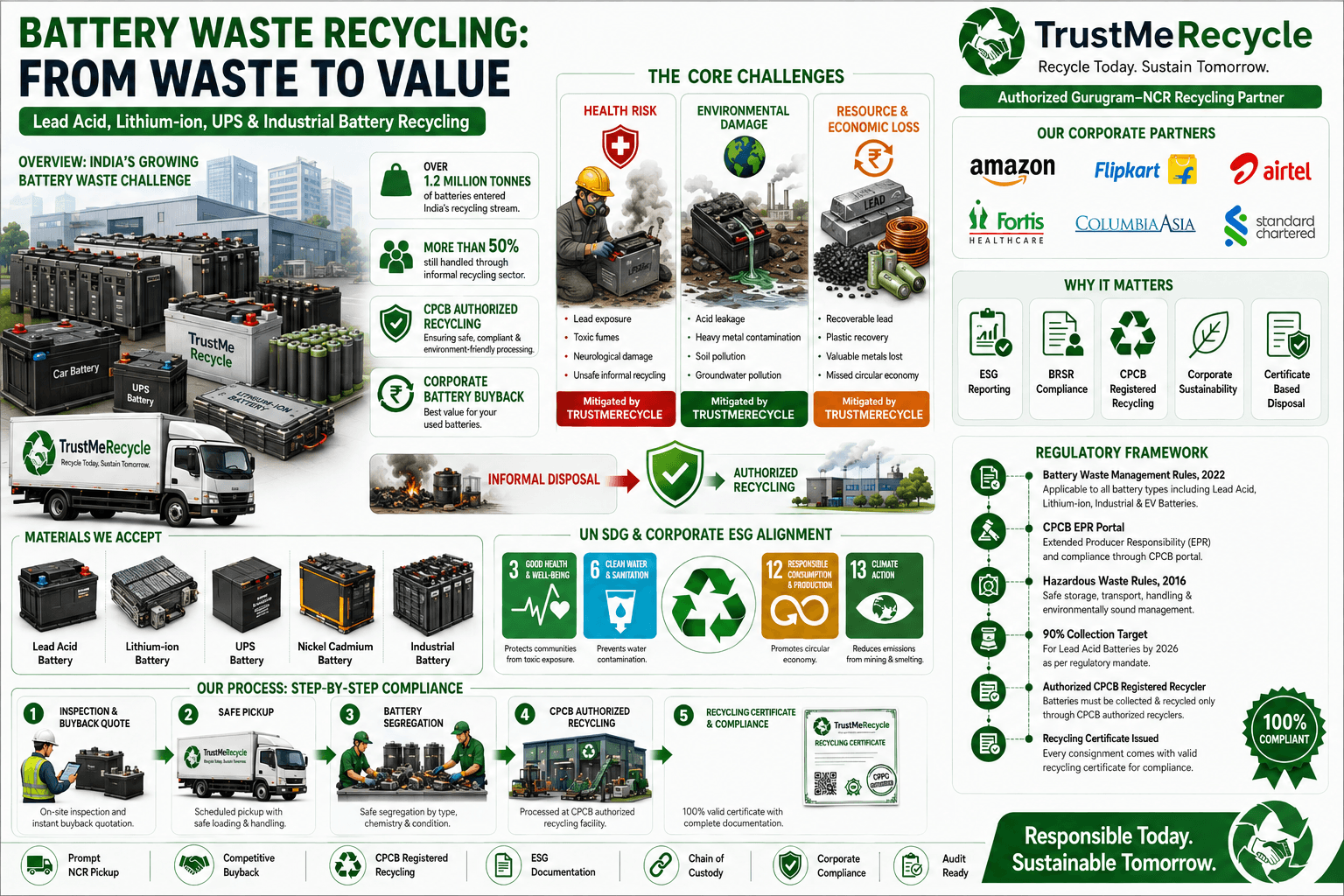
Batteries power modern India — from the car and truck fleets on its highways to the UPS systems keeping hospitals, data centres, and offices running through outages. But every battery has an end of life, and what happens next matters. In 2017-18 alone, roughly 1.2 million tonnes of batteries entered India's recycling stream, and more than half of all batteries in the country are still estimated to end up in the informal recycling sector rather than authorized facilities (Dialogue Earth / Pure Earth research). That gap between what's generated and what's safely recycled is where lead, acid, and heavy metals leak into soil, water, and human bloodstreams.
TRUSTMERECYCLE buys car, truck, UPS, inverter, and industrial batteries directly from businesses — warehouses, hospitals, malls, corporates, and fleet operators — and routes every unit through CPCB-authorized recycling channels, closing that gap for our clients one pickup at a time.
Key Highlights
Processing Model
CPCB Registered Recycling Stream
Corporate Rate Model
Competitive Buyback (No Disposal Fee)
Turnaround Commitment
Prompt On-Site NCR Pickups
ESG Audit Clearance
100% Valid Recycling Certificate
Materials We Accept
The specific battery waste sub-types TRUSTMERECYCLE buys, collects, and routes to compliant recycling.
The Critical Challenges We Solve
Unregulated waste disposal creates severe health risks, environmental damage, and financial losses.
Health Risk
Used lead-acid batteries (ULABs) processed outside authorized facilities expose workers and nearby communities to lead dust and fumes, a neurotoxin with no safe exposure level, especially for children. - **Environmental Damage** — Cracked casings and improperly stored batteries leach lead, sulphuric acid, and other heavy metals into soil and groundwater, contaminating drinking water sources near informal smelting sites. - **Economic & Resource Loss** — Lead-acid batteries are up to 90%+ recyclable, meaning informally dumped or crudely smelted batteries waste high-value lead and plastic that could otherwise re-enter the supply chain.
Health Risk Breakdown
Informal battery recycling typically uses open-pit, coal-fired smelting with no pollution control equipment to recover lead. Workers at these sites inhale and absorb lead through skin contact, and public-health researchers have repeatedly linked communities near informal lead-acid battery recycling sites in India to elevated childhood blood-lead levels. Lead exposure causes irreversible neurological damage in children, and in adults is linked to hypertension, kidney damage, and reproductive harm.
Environmental Impact
A lead-acid battery contains sulphuric acid electrolyte and lead plates encased in a plastic shell. When batteries are stored, crushed, or "recycled" without containment, acid and lead compounds seep into soil and waterways, and smelting without emissions control releases lead particulate into the air, settling on surrounding land and crops. Lithium-ion batteries carry a separate risk — improper handling can cause thermal runaway fires — which is why authorized processing matters across all battery chemistries, not just lead-acid.
UN SDG & Corporate ESG Alignment
Partnering with TRUSTMERECYCLE provides auditable proof for corporate BRSR disclosures and international sustainability standards.
A battery that is bought back, collected, and recycled through an authorized channel is a battery that never reaches an open-pit smelter. For businesses, proper battery disposal supports SDG 3 (Good Health and Well-Being), SDG 12 (Responsible Consumption and Production), and SDG 6 (Clean Water and Sanitation), and strengthens ESG reporting on hazardous-waste handling.
Responsible Production
Keeps recoverable materials inside circular manufacturing chains.
Good Health & Well-being
Eliminates toxic exposure in informal dismantling chains.
Climate Action
Reduces emissions tied to virgin mining and illegal burning.
Sustainable Cities
Prevents unauthorized waste dumping across urban NCR.
Regulatory Rules & Legal Protection
Battery waste in India is governed by the Battery Waste Management Rules, 2022, notified 24 August 2022, replacing the earlier Batteries (Management and Handling) Rules, 2001. The 2022 Rules extend to all battery chemistries — automotive, industrial, portable, and EV batteries — and introduce an Extended Producer Responsibility (EPR) framework via CPCB's centralized portal, including a 90% collection target for lead-acid batteries by 2026. The Hazardous and Other Wastes (Management and Transboundary Movement) Rules, 2016 govern storage, transport, and handling of hazardous constituents like lead and acid electrolyte. Batteries must be collected, transported, and recycled only through CPCB-registered recyclers.
Recycling Certificate Issued
Every consignment concludes with an official document suitable for corporate audits, EPR compliance, and government inspections.
How TRUSTMERECYCLE Handles Battery Waste
A transparent 6-step recycling lifecycle built for scale, accountability, and regulatory clearance.
Assessment & Competitive Quote
We evaluate your battery scrap volume and chemistry and offer a competitive buy-back rate.
Frequently Asked Questions
Ready to Clear Out Your Battery Waste?
Schedule a free on-site evaluation in Gurugram & NCR. Get fair competitive market pricing, prompt pickup, and official CPCB compliance certificates.